
| Target | |
|---|---|
| Synonyms | LILRB4, CD85K, ILT3, ILT-3, LIR5, LIR-5, B4, Leukocyte Immunoglobulin-Like Receptor Subfamily B Member 4, Immunoglobulin-Like Transcript 3, Leukocyte Immunoglobulin-Like Receptor 5 |
| Description | Recombinant Cynomolgus LILRB4 protein with C-terminal 10×His tag |
| Delivery | In STOCK |
| Uniprot ID | XP_045236678.2 |
| Expression Host | HEK293 |
| Tag | C-10×His tag |
| Molecular Characterization | LILRB4(Gln22-Glu259)+10×His tag |
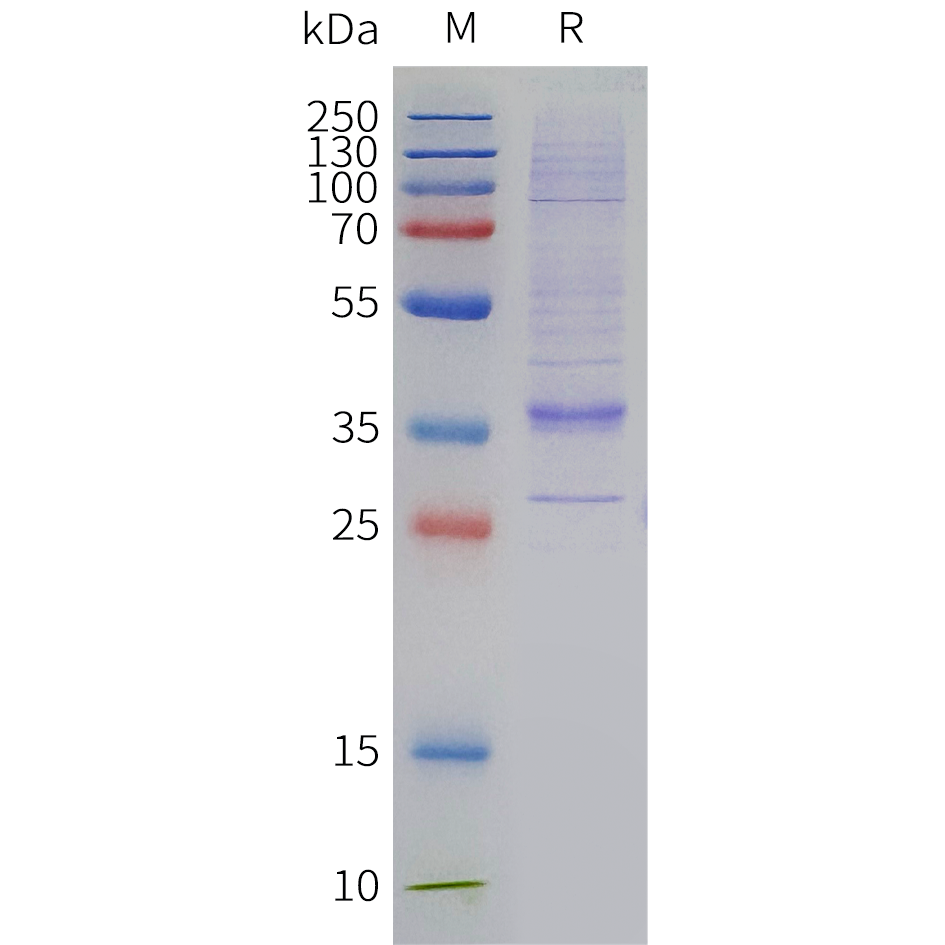
| Molecular Weight | The protein has a predicted molecular mass of 27.5 kDa after removal of the signal peptide. |
| Purity | The purity of the protein is greater than 85% as determined by SDS-PAGE and Coomassie blue staining. |
| Formulation & Reconstitution | Lyophilized from sterile PBS, pH 7.4. Normally 5 % – 8% trehalose is added as protectants before lyophilization. Please see Certificate of Analysis for specific instructions of reconstitution. |
| Storage&Shipping | Store at -20°C to -80°C for 12 months in lyophilized form. After reconstitution, if not intended for use within a month, aliquot and store at -80°C (Avoid repeated freezing and thawing). Lyophilized proteins are shipped at ambient temperature. |
| Sterility | Products are supplied non-sterile. For cell culture applications, dilute in appropriate medium and sterile-filter (0.22 µm) prior to use. |
| Background | LILRB4, also known as CD85K or ILT3, is a type I transmembrane glycoprotein belonging to the leukocyte immunoglobulin-like receptor family. It contains extracellular immunoglobulin-like domains, a single transmembrane region, and a cytoplasmic domain containing immunoreceptor tyrosine-based inhibitory motifs. LILRB4 is predominantly expressed on myeloid immune cells, including monocytes, macrophages, and dendritic cells. Upon activation, its cytoplasmic inhibitory motifs recruit phosphatases and suppress immune-cell activation, inflammatory signaling, and cytokine production. LILRB4 contributes to the maintenance of immune tolerance and the regulation of inflammatory responses. Elevated LILRB4 expression has also been observed in several myeloid malignancies, particularly monocytic acute myeloid leukemia, making it an important target for immunology, cancer research, and therapeutic antibody development. |
| Usage | Research use only |
| Conjugate | Unconjugated |


服务热线
400-006-0995
18062749453